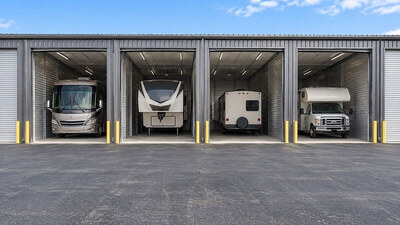
Every fall, Flathead Valley RV owners face the same choice. Do you winterize and use a drive-up bay, or pay more for climate controlled RV storage? The answer depends on your rig and your risk. However, climate controlled RV storage is not right for every owner. So is climate controlled RV storage worth it in Kalispell? This guide breaks down when climate controlled RV storage pays for itself.
Cold alone is not the problem. Speed is. For example, on February 8, 2018, NBC Montana reported that Kalispell dropped 32 degrees in five hours, with gusts up to 56 mph. Then, on January 13, 2024, residents woke to 35 below, according to the Daily Inter Lake. Afterward, milder Pacific air returns.
Those swings create condensation. When warm, moist air inside a closed RV hits a cold wall, water forms. Winnebago advises owners to keep indoor humidity at 60 percent or less. It also warns that closed cabinets can grow mold. RV LIFE adds that trapped moisture causes stains, rot, and delamination. In fact, much of it hides inside wall cavities until spring. That is why climate controlled RV storage matters in cold markets.
First, water left in lines or a water heater freezes and splits fittings and tanks. Batteries suffer too. A fully discharged lead-acid battery can freeze near 20°F, says RVelectricity. Then comes the slow damage. Moisture soaks paneling and insulation, and the bond between wall layers fails. As a result, you get a bubbled, soft sidewall. Climate controlled RV storage targets that moisture damage most directly.
The main benefits of climate controlled RV storage are simple. First, steady temperatures protect plumbing, seals, and batteries. Second, lower humidity helps keep mold and mildew away. Third, a stable space shields upholstery, electronics, and wood trim. Together, these benefits explain why climate controlled RV storage appeals to owners of newer rigs.
Start with the premium for climate controlled RV storage. Extra Space Storage says climate controlled RV storage costs $25 to $50 more per month than standard indoor storage. In Kalispell, though, most owners compare it with a drive-up bay. At Stillwater Storage’s November 2026 rates, a climate controlled 10x30 costs $590 a month, while a 14x40 drive-up unit lists at $379. That gap is about $210 a month, or roughly $1,270 over a November-to-April season.
Now look at the other side. Camping World puts a freeze-cracked water heater tank at $600 to $1,500. Happy Campers’ 2025 repair index lists wall delamination at $3,000 to $10,000 or more. Meanwhile, FindBoatStorage estimates mold cleanup at $500 to $3,000.
Be honest about the math. Freeze damage alone rarely justifies climate controlled RV storage. A professional winterization costs $75 to $150, per Camping World, so it prevents most freeze problems for far less. Moisture is different, however. Winterizing does not stop it. Therefore, the real case for climate controlled RV storage is moisture, not freezing.
Ads often use heated RV storage, indoor RV storage, and climate controlled RV storage as if they mean the same thing. They do not. Storage.com notes that “heated storage” is a regional term, so ask what a unit actually controls. Some heat-only setups, for instance, ignore humidity. An unheated indoor unit keeps snow and UV off your rig. Still, the air inside follows the outdoor temperature, just more slowly. That lag is where condensation lives, and climate controlled RV storage closes that gap.
Stillwater Storage sits at 135 Barkley Ridge Trail, just east of US-93 north of town. Heading north, you pass the Majestic Valley Arena on the left before the turn. The facility says its climate controlled units, including the 10x30, keep a consistent temperature range. In addition, its RV storage blog says insulated indoor units hold temperatures steady year-round. Steady temperatures mean fewer warm-cold cycles, and fewer cycles mean less condensation. As a result, climate controlled RV storage makes the most sense when the thermometer can fall 30 degrees in a few hours.
If you are weighing the upgrade, start with Stillwater’s page on climate controlled RV storage in Kalispell. First, confirm your rig’s length and height against the unit. A 30-foot unit won’t fit every fifth-wheel or Class A. For a larger coach, a drive-up unit plus a climate controlled RV storage space for gear can work well.
A newer or high-value RV gains the most from the premium. Do you leave mattresses, bedding, or electronics inside all winter? Then lean toward climate controlled RV storage. Has your roof sealant gone a year without inspection? Fix that first, because no climate controlled RV storage unit makes up for a leak.
Also think about the calendar. A rig parked from November until your first spring trip to Flathead Lake or Glacier faces a long season. The park’s West Entrance sits about 33 miles from Kalispell on Highway 2, per the National Park Service. So long seasons favor climate controlled RV storage.
However, if you camp in winter or use the rig every few weeks, a drive-up unit with winterization usually works. Finally, if you can’t check on the RV each month, steady conditions do the watching. Stillwater also lists 24/7 access, so checking on climate controlled RV storage each month is easy.
Climate controlled RV storage isn’t a must for every rig in the Flathead. A well-winterized, dry trailer in a solid enclosed unit can survive a Kalispell winter. But if moisture you can’t see threatens a rig worth protecting, the math changes. In the end, the monthly premium for climate controlled RV storage is modest against the price of a soft wall. For more on the tradeoffs, read Stillwater’s guide to indoor vs. outdoor RV storage options in Kalispell.